Showing posts with label frico heaters. Show all posts

Thursday, 13 December 2012

December Offer: 10% Discount On All Infra Red Heaters

December Offer: 10% Discount On All Infra Red Heaters

Euro Controls UK Ltd are offering  a 10% reduction in price on all of our infra red heating products.

The winter has well and truly settled in now, and the need for infra red heating has gone up.

If you need help with your heating, and you are looking for a cheaper alternative to heating your office, home, yoga studio or warehouse - get in touch.


Happy Christmas to all of our customers, and a Prosperous New Year.


Best wishes, 


The Team at Euro Controls UK Ltd

Offer Expires: 22nd December 2012

Wednesday, 28 November 2012

Why Infrared Electric Heating Is The Future

We recently found these messages relating to "Why Infrared Electric Heating Is The Future", posted on a discussion forum and thought it made great reading.

Have a read and maybe post a comment on our blog to let us know what you think?

http://www.lowcarboneconomy.com/userprofile/infranomic_uk_limited/_discussions/why_infrared_electric_heating_is_the_future/3890


Friday, 23 November 2012

Cobham Pilates - Feedback

Just thought I would share the feedback we received from Cobham Pilates Studio Founder and Owner Donna Pourteymour:

"...the heater is fantastic and the installation was great!   It really makes a difference!  Thank you!"


Our engineer installed our latest FRICO infra red heater in the reception area of Cobham Pilates, to keep guests and those working at reception warm and toasty during the winter months. 

The radiant heat from the heater warms the surfaces and the people within a 2-3 metre range, making the ideal eco friendly, energy saving heating solution!


Cobham Pilates Reception
 

"Cobham Pilates was established in 2006 with the goal of bringing our passion for Pilates to the High Street of Cobham, Surrey."
"We offer more than 65 weekly Mat and Reformer classes grouped by ability level, as well as Cardio Pilates, NYC Ballet Workout and Studio Circuit Sessions. 
We specialize in expert private tuition utilizing all pilates equipment, providing you with a uniquely tailored pilates program for your body.
We offer rehabilitation for injuries as well as "pre-habilitation" for injury prevention and sports performance.
We offer continuing development and teacher's classes by the most respected teacher trainers in the industry.
Our outstanding team of teachers, all of whom hold either Body Control Pilates® or other internationally recognized certification, are waiting to meet you at our studio.
Our passion is contagious… come and see what we can do for your body."


Wednesday, 14 November 2012

Problems Heating Your Offices??

Infrared Heating Could Be The Solution!! 
 

Cold working environments
Open-plan office environments are mixed with closed offices and make it difficult to achieve well functioning ventilation, which affects heating. By using Infrared Heaters you are able to heat individual stations and desks in an office environment and in a reception it is possible to create different temperatures in different zones, despite the room temperature being the same throughout the entire premises.

Chill factor from windows
Chill factor is a phenomenon that occurs near most windows. In most buildings the chill factor is relieved using a convector placed under the window. Today, it is becoming more popular to fit windows all the way down to the floor and the convectors must be recessed in the floor to protrude up into the window.
Using a Thermoplus Infrared Heater located on the wall above the windows can make a big difference to the experienced temperature. A smart control system means that the Infrared Heater can be controlled so that it switches on as necessary.

Total heating
Office environments are places where many people need a pleasant working environment. Work is stationary, which places great demands on an even and comfortable indoor temperature meaning creating energy efficient heating becomes even more important.
Today there are good solutions for overall heating using Infrared Heaters. Installing Infrared Heating Cassettes in a suspended ceiling gives almost invisible heating. As Infrared does not have any moving parts it's silent and there's no air movement. The Cassettes can also be easily moved around the suspended ceiling if the premises are redesigned.

Expensive to keep warm all day
Premises used as offices are usually only populated at certain times during the day and not every day of the week. Having the heating on all day and all year can be expensive.
By installing Infrared Heaters and a programmable heating control different temperatures in different zones can be maintained. For example, areas where stationary work is not carried out can maintain a lower temperature, whilst a slightly higher temperature can be maintained in the office environment. A programmable control can also reduce the temperature during the nights, weekends and holidays.

Draught at the entrance
When an unprotected door is opened, cold air flows in at floor level and hot air flows out through the upper section of the door. Before cold air is heated, staff are exposed to drafts and low temperatures.
By installing an Air Curtain inside the entry the indoor climate can be significantly improved. Air curtains must always be equipped with heating if there are staff who work close to the entry so by combining an air curtain with Infrared Heaters you can create a pleasant working and welcoming environment.


Friday, 26 October 2012

Hot Yoga – Why Heat & Humidity?


Heat and humidity allows the body to warm up properly. This in turn reduces the risk of injury and allows you to work more deeply.

If you take into consideration that Hot Yoga originated in India, where they have a much hotter and humid climate, it makes sense that we should prepare our bodies with heat and humidity before stretching.

By combining Heat and Humidity in Hot Yoga studios the following benefits can be gained;

·         Muscles and connective tissues become elastic allowing for greater flexibility with less chance of injury;
·         Encourages sweating which assists the detoxification process;
·         Blood becomes thinner which clears the circulatory system;
·         Helps to multiply T cells which fight infection and in turn keep your immune system functioning properly;
·         Helps to increase your heart rate which improves your cardiovascular system;
·         Burns fat more effectively;
·         Helps you to think clearer;
·         Improves strength because proteins can be utilized more effectively;
·         Speeds up the breakdown of glucose and fatty acids;
·         Provides strengthening of willpower, self control and determination.

As you can see, there are many benefits when heat and humidity are introduced into your workout, so why not contact us today for information on our Infrared Heating Panels and Humidifiers.


CAREL COMPACTSTEAM HUMIDIFIER


Wednesday, 10 October 2012

Tuesday, 2 October 2012

Hot Yoga Design: Top 10 FAQs


The Top 10 FAQs On Hot Yoga Design

eurocontrols.co.uk 0870 770 1500


1. How much do the heating panels cost?

Between £240.00 and £300.00 per unit.  We’d do a heat loss calculation and recommend the right number of units are used in your studio to achieve a particular temperature.


2. Does it matter how high the room is?

Generally not, as long as the ceiling is flat, well insulated and has mounting points within the structure.  We haven’t come across any ceilings that have posed a real problem as yet.


3. How many studios have you supplied?

We started our first in February/March this year with The House of Yoga, and we have just supplied our 10th studio.


 4. What temperatures can they go to?

We work on from heat loss calculation.  So long as the room is well insulated and has enough power supply, we can go up to 40C.  

Following our site survey, we will enter the information such as dimensions, insulation type, building type, desired temperature, etc, and determine exactly how many infra red heaters are needed for the room.


5. What are the running costs?

For a 100m2 room, you would be looking to pay from 50p per hour to £2.60 per hour when the system is on.


 6. What colours do they come in?

The standard colours are white and graphite grey, however, we can have them painted to match the design of your studio at an additional cost.


7. Are they the same as FAR infrared?

Same technology, just different terminology – the heaters use infra red waves, the same as FAR infra red to heat the objects in the room.


8. What is the difference between using your heaters and a hot air system?

A hot air system will heat the air, meaning it has to be pumping out hot air constantly, the infra red heaters will heat the objects in the room, including the people representing a heat that is more comfortable for the body – it heats very much like the sun, is more cost effective, silent and requires very little maintenance. 


9. Why do you need a humidifier?

In the winter, the air humidity will drop, meaning it won’t feel as hot in the studio without the extra humidity – in order to get people sweating on dry days, it is important to add the humidity using a commercial humidifier.  They are cheap to run, and will only be used periodically through the year.


10. How long would it take to have it all up and running?

Within 2- 3 weeks usually – we need to organise diaries for the engineers, stock the products, design the layout, and perform a heat output calculation.


Contact: 0870 770 1500
Email: sales@eurocontrols.co.uk
www.eurocontrols.co.uk

Friday, 3 August 2012

Infra Red Saunas - Imagine Having One Of These At Home!

Hot yoga is becoming increasingly popular among the yogi community, and it is always useful to know what other applications infra heating fits into - I'm taking a look at infra red saunas....

Red Saunas use infra red heating for saunas - what a fantastic concept. We are not affiliated in any way to Red Saunas, but I was browsing through other keywords for where / how to house infra red or radiant heating systems and came across these guys.

I'd seen infra red heated saunas advertised on the internet a while ago, but I can remember using one of those conventional saunas years ago at the local health club, and thinking - how on earth is that going to be better than having a normal sauna, and is it going to be as effective in getting the temperature up to 40 - 60C?

Mind you, I haven't actually tried using an infra red sauna as yet, but knowing how hot the panels get in the office I can see it working (and I would guess Red Saunas wouldn't have much of a business if it didn't!).


Red Saunas


  • No having to throw water over hot coals
  • No having to wait ages for the sauna to heat up
  • No hot spots
  • Cost effective (much cheaper than a standard sauna)
  • Clean
  • Quick to set up
  • Space saving......

You get total heating within the sauna to sweat those toxins out leaving you feeling refreshed and cleansed.

So along with infra red heating for the ceiling, underfloor heating, outdoor heating for the patio using infra red heating - you can now have your very own infra red sauna in the house / shed / garage / office???

Seriously, check this website out for more information: Red Saunas


Thursday, 2 August 2012

Interview With Phil Alcock, MD, FRICO UK - Infra Red Heating


In the previous article, we spoke about the types of application (from the weird and wonderful to bog standard installation), the logeivity of such a system and how to calculate the energy savings derived from using infra heating technology.  In this, the last portion of the interview with Phil Alcock, MD of FRICO UK , we discuss the affects of infra red waves on the skin, what sort of sun tan (!) you can expect and we take a brief look at the future of infra red heating....

With regard to the infra red rays won’t it harm the body?


Interesting question actually because apart from you I don’t think I’ve been asked that before.  The facts are that radiant heating is part of the electromagnetic spectrum and it’s infrared and that is not to be confused with ultraviolet which is on the electromagnetic spectrum, but it is a completely different part of the wave length and also it is not to be confused with X-rays and micro waves which are obviously very dangerous.

Picture: Health Veda
Infrared is entirely benign and in fact as humans we are designed to feel comfortable with infrared energy and as mentioned previously, any warm surface gives off infrared energy which is perfectly safe.  It is not ultraviolet which is the harmful component of being in the sunshine which is also on a completely different end of the spectrum, in fact conversely infrared is widely known for its health benefits some of which can be overstated, and it’s not a cure all, but the fact that the body is designed to feel comfortable in the infrared energy will indicate that infrared heating is very beneficial.
Most people know that if you sit in an environment you need the air to feel quite warm to feel comfortable.  The humidity has an affect if you are sitting in a damp room the damp has an effect that’s also unhealthy.  You don’t get this problem with radiant heating, as it will heat the structures and prevent the condensation build up.

Plus, there is another health benefit to using infrared energy - there is no air movement. If you have a convection system there is always air movement because you set up a convection pattern – as warm air rises cold air falls to the ground, and that means that dust moves around the room along with anything else unpleasant in the air.  With an infrared system there is no air movement and it is very clean and that is why it is very popular in hospitals – they use a lot of radiant heating because they are concealed, meaning there are zero kinds of radiators to collect the dirt or pipe work to clean or nooks and crannies making it a very healthy system. 

So I won’t get a suntan from it then?

I’m afraid not – you might get a warm glow but not a tan!

What is the future for infrared heating?

Our experience is that it is growing all the time, particularly the electric infrared heating systems in the UK, it’s been a gas and radiators market and that is down to tradition more than science. Most people know that fuel costs are rising and gas is rising faster than electricity, and no fuel is cheap nowadays, but well insulated building are favouring systems (if you look at the running costs of a system) that requires no maintenance and is very cheap and easy to install, such as infrared heating.
So in domestic situations there is a move towards this sort of heating - we are also finding more and more use in commercial situations and sports environments, and that is a fast growing market because as you know there is more interest in health and leisure activities right now.

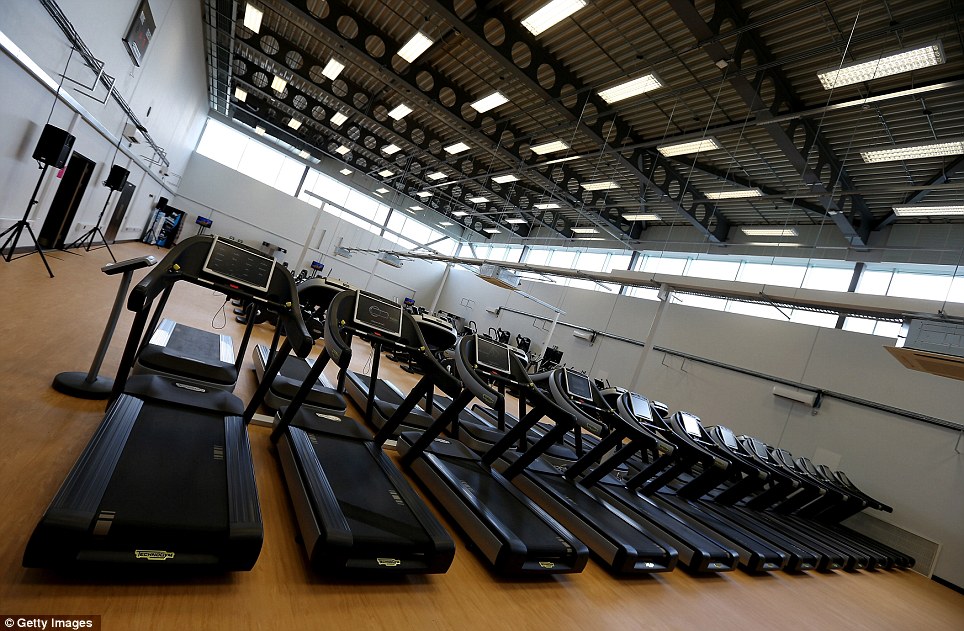
Picture: Getty Images


So we find that the uses and applications are growing all the time and we are always going to need heating, certainly in this country, but what we also find is that we can use less heating – the typical house heating load is a fraction of what it was a few decades ago.  Because the products are very flexible and able to fit into many different types of applications, it means infrared heaters can be used absolutely anywhere.

So would you agree because of the advancement of building design and construction that has encouraged this growth in using infrared technology?

Yes absolutely - no system is perfect and there are things to be considered when designing radiant heating systems.  One of the things to consider particularly in a residential and office situation is that you still need enough heat in the building to cover the heat loss, and if the heat loss is very high i.e. in a badly built leaky building, that would mean using a lot of radiant heating.  The problem can then be that it can appear too hot because our bodies can directly absorb the infrared heat coming from a large number of power infrared heaters -  and that was the problem in the past with heating these old badly put together buildings such as warehouses and large halls.

That’s all changed and now building regulations have changed and radiant heating comes in to its own.  One of the things that we bring to the market is having the expertise in how to apply the product to design a radiant heating system.  We have found that you have to be careful not to oversize it rather than undersize it, it is more often the case the system has been oversized and getting too warm than not warm enough. 

So it is important as part of the whole heating package that there is a controls system to make sure the system doesn’t get too hot, and again you need a bit of expertise and experience to design the system and to design it correctly so that it is working as perfectly as a heating system can. 

Thanks for your time Phil. 

Monday, 30 July 2012

Interview with Phil Alcock, FRICO MD - Infra Red Heating


In the last blog entry - Phil and I were discussing using infra heating as a total house / office heating system, and comparing radiant heating with gas central heating, and ground source heat pumps.  In this article we will look at the various applications for infra red heating, the difference between infra red and radiant heating, and energy savings.....


So how long will an infra red heating system last?


The shelf life of the system once installed will be the life of the building and we certainly know that other electrical appliances are still going strong even after 20 years of running quite happily and they run at much higher stress loads (take your dishwasher/washing machine).

Commercial environments differ somewhat in that there are things to consider like damp and corrosion, so a commercial system might last 15 years but it is in a much harsher environment

We supplied one of the major zoo’s lions dens, what sort of other interesting projects have you seen?

We have done a number of projects for zoos and their reaction to radiant heating is exactly the same as humans.  Because radiant heating is the natural form of heat - we always say it is like heat from the sun - most animals that live on the planets are designed to keep warm and comfortable with radiant heat, so as well as heating animals from the Savannah like lions, we’ve heated snake and reptile enclosures, and  we’ve heated alligators enclosures where the animals and reptiles bask in the radiant heat environment. 


It is very effective.  And, another advantage with using a radiant heating system in a zoo is they don’t emit visible light so the animals stay warm but they don’t get the impression that it is daylight 24 hours a day!

We’ve spoken about using the heating system in sports halls, yoga studios, modern gyms – with regard to sports halls we recently made a large installation in France in a judo stadium with a very high roof, and the challenge with judo and indeed hot yoga is that at floor level the mats need to be warm, and to an extent need to be kept dry – although I’m not sure in judo whether that is meant to be dry from sweat or blood but it is certainly needed to be kept dry, and the infrared heating (as well as keeping the occupants warm) keeps the surfaces warm – so  if you have a yoga studio, you not only keep the participants warm but their exercise mats are comfortable as well.

We put infrared heating systems in halls as the classic problem there is that the village hall is used in the evenings and a just few nights a week and the rest of the time it is off.  The yoga instructor comes in to find the building stone cold, switches an infrared heating system on and within a few minutes the heaters are up to their full temperature emitting heat, you can put your exercise mats down and immediately feel warm, so we do a lot of those sorts of applications because they are away from conventional sources of heat and are only used periodically. 

We also use a lot of radiant heating for outdoor heating smoking areas for restaurants and public seating areas where they wants to maximise the use of the drinking or eating area. Process and industry favour infrared heating for example in warming plastics as they travel along the production line.  We did some work with one of the major car manufacturers where they manufacture components, and if the factory is cold, making the plastic panels fit in to their surroundings gets very hard and can become brittle - they need a heating system to keep the plastic a little bit soft and pliable.  I could go on and on, but there are many many applications for infrared heating.

You mentioned radiant and infrared - what is the difference between these two terms?

It is the same thing - a lot of the terminology being used is referring to radiant heat, infrared heat, you’ll see FAR infrared, particular an American terminology yet the heating is always infrared heat – the basic physics are that any ‘body’ be it human or any other hot surface – as soon as it gets hot, will start to emit infrared energy, which is the energy that we use.  It is an electromagnetic wave that is part of the lighting spectrum, but it is at a very low level so you can’t see it when the ‘body’ gets hot. As an example, when a hot cup of coffee gets hot it will start to emit infrared energy, but we don’t see it necessarily.

So we’re emitting energy all the time?

Yes and most people are familiar with that, as most people will have seen infrared cameras – like the thermal imaging cameras police use on the police stop programs, this is showing the thermal signature of the human body, it picks up the spectrum of light from the body. Humans can’t see it, but some animals can and use it to hunt, but we can’t see it – but that is all we really need to know.

From a technical standpoint, on the infrared spectrum we can move from long wave infrared which produces heat energy but no light, and as we increase the surface temperature of that heat emitter we get to a point where it can be seen as visible light by the human eye - that comes at about 700⁰C and when an object gets to that temperature it begins to glow. We can see it glow from the heaters that we see outside the pubs and bars – essentially it is all infrared heat and all radiant heat so the two terminologies are interchangeable. 

Thank you for clearing that up.  Building consultants are looking to make savings – have you any reassurance you can give them?

Most building consultants and people who design buildings are certainly familiar with the concept of radiant heating and it’s nothing new.  It’s something that has been around for a very long time.  What is changing is the number of applications and the number of products that we can use, which have improved a great deal. 

Control systems have improved a lot and building standards have improved a lot as well – making very well insulated properties.

The reassurance that we can offer energy consultants is to point to case studies and calculations - it is very easy to use the FRICO Heat Output Calculation Tool that we have on our website to work out the heat loss of the building.  It is very easy to put the details through online tool and one of the parameters you change when doing the calculation is from infrared heating or convection heating.


One of the main areas of energy saving is that you have very little high heat build up with infrared heating.  What this means is that with a convection system the warm air rises, and all of that hot air at the top of the building has cost money to heat so when you design for a warm air convection system you have to allow for that discrepancy and to allow for say 21⁰C at person height where you are sitting and 27⁰C at ceiling level.   You would have to pay for that energy and on a calculation simulation we can easily show the difference between the radiant heating and the convection heating.  With the radiant heating there will be less than a 1⁰C difference between the air temperature at floor level compared to ceiling level and that is where is translates in to an energy saving.

More to come on infra red heating.....


Monday, 23 July 2012

Hot And Sweaty Again - But Will It Last?

"Temperatures this week are likely to top that figure with 30C possible across parts of south-east England between Tuesday and Thursday.

Absolutely loving the weather at the moment, check out the latest from SKY Weather - it gets better (apart from Scotland and Cumbria - sorry!):

http://news.sky.com/story/963734/weather-hot-week-forecast-for-parts-of-uk


Friday, 20 July 2012

How To Heat The Flagship Apple Store

Large Apple Greenhouse - New York

I expect the guys at Apple real estate have the heating system pretty well wrapped up, but a building of this type will come with plenty of heating, cooling and ventilation issues, if not properly managed.

For one, we had a green house in the back garden that looked a little like this (well OK,it wasn't quite as big, and we obviously weren't growing apples inside) and it was south facing....so in the morning, on a damp spring day you could see the condensation building up on the windows, slowly turning into thin streams of water, trickling down the window pains and onto to shelving.

OK, so who's really that interested in my parent's greenhouse?  - just to prove a point though, buildings with so much glass and exposure to sunlight will suffer from the above without a well planned out heating and ventilation system.

Underfloor heating that is programmed to switch on a couple of hours before anyone sets foot in the building, and certainly before sunrise will help to alleviate the damp conditions and should eradicate all condensation on the glass surfaces once the glass has begun to absorb the infra red electromagnetic waves.

Once the doors fling open for the mad frenzy of Apple Enthusiasts - condensation will be no more.


Wednesday, 11 July 2012

Infrared Heating - Discussion With Phil Alcock, MD, FRICO

Contd....Part 2 of Discussion With Phil Alcock, MD, FRICO UK.


Thanks Phil – infrared is becoming more and more popular in yoga studios, gymnasiums, sports halls; do you see any other growth areas where infrared heating can be used?

Infrared heating will provide heat in large areas such as warehouses, churches, sports halls, gymnasiums, which have very large air volume structures and traditional buildings like a warehouse, which is not usually well insulated.  Trying to heat the air space in those buildings is almost impossible or certainly very expensive to do, so radiant heating is better because you don’t have to heat such a huge air space. 
Radiant heating has not been the most obvious option to use, but now with very well insulated properties and at the other end of the scale, living rooms, domestic rooms, offices, yoga studios, most new buildings are now very well insulated - so radiant heating is a very, very effective solution.  Part of the reason for this is that the heat requirement in a well insulated environment is very low.  One of the benefits of using radiant heating is that you can very precisely match the heat loss of the room to the power needed - so in theory if the heat loss is 700W you install 700W of radiant heating.  You precisely match the heat load for that the room.  

Again, the advantage of radiant heating is that you don’t need to preheat the air or to provide a more powerful unit to provide a fast warm up, so you can very precisely match the heat loss.  If the heat loss is low, and for a small room typically it may only be few 100W which is the sort of heat contribution you would get from a couple of light bulbs - a small amount of radiant heating can provide a similar amount of radiant energy and because of that you can hide the radiant heating in parts of the structure.  You can put it in the floor, you can put them in the ceiling or on the wall as decorative panels, so there is a huge amount of possibilities but the main advantage is that you can directly match the heat loss and hide them in the structures very discreetly.

So what with better building standards – the use of infrared heating looks to be a far better alternative to gas central heating?

Yes exactly, and if you class under floor heating systems as radiant heating (which they are) there are an awful lot of new homes using this method of heating, and under floor is a very successful heating system – wet or electric – it is popular mainly because it is very easy to connect to a heat pump.  

Heat pumps are very energy efficient but they are very high capital costs and if you look at domestic radiant heating, it is very low capital costs and absolute zero maintenance.  In fact a lot of radiant heating systems we supply are intended to be largely DIY installed type products, so there is not such a huge level of skill required to install electric radiant heating system  - so it has a low capital cost and it has a low running cost which are just more examples of the advantages of using infrared heating systems – so, the fact is that when placed in a well insulated modern building we can provide heat with very low energy without the maintenance worries and costs.

Managing a sports centre?  Looking for ways to save energy?  Why not try installing infrared heating panels............visit our site:  Euro Controls UK Ltd