Showing posts with label euro controls uk ltd. Show all posts

Friday, 25 January 2013

Heat Recovery Systems

As building efficiency is improved with insulation and weather stripping, buildings are intentionally made more airtight, and consequently less well ventilated.

While opening a window does provide ventilation, the building's heat and humidity will be lost in the winter and gained in the summer, both of which are undesirable for the indoor climate and for energy efficiency.

Due to all buildings requiring a source of fresh air the need for a Heat Recovery System has become obvious and whether it be for a hot yoga studio, office or even for domestic use Euro Controls UK Ltd are now able to offer a solution.


Please visit our website or feel free to contact us on the above number for further information.

Wednesday, 28 November 2012

Why Infrared Electric Heating Is The Future

We recently found these messages relating to "Why Infrared Electric Heating Is The Future", posted on a discussion forum and thought it made great reading.

Have a read and maybe post a comment on our blog to let us know what you think?

http://www.lowcarboneconomy.com/userprofile/infranomic_uk_limited/_discussions/why_infrared_electric_heating_is_the_future/3890


Thursday, 15 November 2012

8 Steps to Changing or Updating Your Distribution Board

Since installing FRICO infra red heaters in to hot yoga studios, we have come across a few sites that need to upgrage or update their existing power supply to accomodate for the extra power needed to heat the room up to 42C:


Schneider Distribution Board

  1. Contact your electricity provider (British Gas / NPower)
  2. Let them know you are planning on adding extra heaters to the system and you require an upgrade / updated header
  3. They may refer you to a national energy provider, such as UK Power Networks
  4. They willl send you a form to complete (for upgrading existing power supply)
  5. They will send an engineer to complete a site survey for the upgrade the power or to update the "header"
  6. Following the site visit, they will send an engineer to make the changes and upgrade the system
  7. Depending on the location of the power supply to the power distribution board they may need to close part of the road or make special arrangements    
  8. Use a local electrician to provide you with a new power distribution board with spare "ways" to connect the new heaters to, along with 10 to 40Amp MCBs on the board 

So, to keep things simple, deal with your electricity provider, ask them the procedure to upgrade or updte your existing power suply and then contact us when you are ready to install the infra red heaters.

If you have any further questions on power supply, please do not hesitate to contact us on the details at the top of this blog.

Best wishes!

Tim   

Thursday, 25 October 2012

THE HOT BOX: Purpose Built Hot Yoga & Training Studio

Euro Controls UK Ltd have created THE HOT BOX: The Purpose Built Hot Yoga & Training Studio that has been developed on the back of the increase in demand for hot yoga in America, UK and Europe.  


THE HOT BOX comes complete with infra red heating panels to take the room to over 40C plus a a state of the art steam humidifier to keep the humidity levels up, along with specialised mood lighting to create the perfect atmosphere to practice hot yoga, fitness and sports rehabilitation exercises.


THE HOT BOX wood is from Finland - Euro Controls UK Ltd have selected the very finest of wood that is well insulated meaning the heat that is generated within THE HOT BOX stays where it should, without waste.  Clients will be able to practice in the heat without any air flow, noisy fans or stale air - perfect!

THE HOT BOX is suitable for athletes looking to get the edge in terms of pre match training.  Studies have shown how training in hot, humid conditions can improve performance by  up to 8%.

 What does this mean for athletes living / residing in cooler climates?

They can train in the heat before travelling to a tournement in a hot and humid climate.  For example, Andy Murray, World No.3 would be able to acclimatise to the hot weather in Dubai, Australia, America where temperatures will range from 30-40C +, before travelling to the tournement destination giving him the edge before even setting foot on court and practicing before a main event.  His body will have been conditioned in hot humid conditions using the THE HOT BOX, giving him a head start, and giving him the confidence to perform in the hottest environments.

In addition to the added benefits of using THE HOT BOX for heat conditioning, athletes can use the hot environment to stretch and perform rehabilitation exercises and promote quicker healing.  By subjecting the muscles of the body to higher temperatures, the athlete will find a greater range of motion with stretches, thereby flushing the muscles with oxygenated blood and clearing the muscle cells of waste, and preventing the build up of scar tissue.

Studies have shown that muscles tend to tighten up after an injury, therefore, THE HOT BOX could be used as a way to prevent injury in the first place but also to help in the healing and strengthening process needed post injury.

THE HOT BOX is set to take the hot yoga, sports rehab and sports training sector by storm and will be the must have item for yogis and athletes alike.

For more information Contact Ussales@eurocontrols.co.uk / 0870 770 1500

Wednesday, 10 October 2012

Hot Yoga Studio Design: The Fitness Space

 Hot Yoga: The Fitness Space, Ascot

The Fitness Space in Ascot have a brand new hot yoga studio installed thanks to our engineers at Euro Controls UK Ltd. 

We specified and installed 9 FRICO radiant heaters, with controls to provide approx. 10kW of heating power to the room.

Read the full article here:  http://www.humidifiers-uk.com/page/hot_yoga:_the_fitness_space


Tuesday, 2 October 2012

Hot Yoga Design: Top 10 FAQs


The Top 10 FAQs On Hot Yoga Design

eurocontrols.co.uk 0870 770 1500


1. How much do the heating panels cost?

Between £240.00 and £300.00 per unit.  We’d do a heat loss calculation and recommend the right number of units are used in your studio to achieve a particular temperature.


2. Does it matter how high the room is?

Generally not, as long as the ceiling is flat, well insulated and has mounting points within the structure.  We haven’t come across any ceilings that have posed a real problem as yet.


3. How many studios have you supplied?

We started our first in February/March this year with The House of Yoga, and we have just supplied our 10th studio.


 4. What temperatures can they go to?

We work on from heat loss calculation.  So long as the room is well insulated and has enough power supply, we can go up to 40C.  

Following our site survey, we will enter the information such as dimensions, insulation type, building type, desired temperature, etc, and determine exactly how many infra red heaters are needed for the room.


5. What are the running costs?

For a 100m2 room, you would be looking to pay from 50p per hour to £2.60 per hour when the system is on.


 6. What colours do they come in?

The standard colours are white and graphite grey, however, we can have them painted to match the design of your studio at an additional cost.


7. Are they the same as FAR infrared?

Same technology, just different terminology – the heaters use infra red waves, the same as FAR infra red to heat the objects in the room.


8. What is the difference between using your heaters and a hot air system?

A hot air system will heat the air, meaning it has to be pumping out hot air constantly, the infra red heaters will heat the objects in the room, including the people representing a heat that is more comfortable for the body – it heats very much like the sun, is more cost effective, silent and requires very little maintenance. 


9. Why do you need a humidifier?

In the winter, the air humidity will drop, meaning it won’t feel as hot in the studio without the extra humidity – in order to get people sweating on dry days, it is important to add the humidity using a commercial humidifier.  They are cheap to run, and will only be used periodically through the year.


10. How long would it take to have it all up and running?

Within 2- 3 weeks usually – we need to organise diaries for the engineers, stock the products, design the layout, and perform a heat output calculation.


Contact: 0870 770 1500
Email: sales@eurocontrols.co.uk
www.eurocontrols.co.uk

Thursday, 13 September 2012

What Is Hot Pilates?


Core Control, High Temperature and Hot Pilates


Hot Yoga, Bikram Yoga and other forms of yoga under controlled heat, have seriously taken the health and fitness market by storm in the last few years.

Naturally, out of this, other forms of exercise such as hot pilates will compete to be the next big thing to blast on to the scene offering a hot experience within a room similar, if not the same, as a hot yoga studio with temperatures reaching up to 40C.

This video on Youtube.com will give you insight in to the next big thing in health and vitality - hot pilates.  Here you can see the guy sweating his heart out while holding certain poses under intense heat.  It would seem that adding the extra heat to the body via infra red heaters or using a hot air system improves the circulation and the warmth of the muscles, while at the same time relaxing tight muscles allowing for a greater range of motion and therefore a deeper stretch.


Pilates practitioners will tell you that controlling the core musculature - made up of the transversus abdominis, multifidus, diaphragm and the pelvic floor, contributes to better posture, fewer injuries and greater stability when performing sports or lifting heavy objects....

....add some extra heat to the room, and the likelihood is that you will have to concentrate 10x harder to control the core, switching on the above muscles and performing precise controlled movements, but the benefits of sweating and detoxing are fare reaching and much needed in this world of polluted air, food and water sources.

We are in the process of providing a hot pilates studio with a proposal on taking the temperature of the room to above 40C.

Look out - you could be doing aerobics classes in 40C soon!

www.eurocontrols.co.uk


Wednesday, 22 August 2012

Top 5 Tips: Hot Yoga Studio Design


Whether you are looking to build a brand new, purpose built hot yoga studio, or add heating to an existing yoga centre to provide an additional offering to your customers / clients / yogis, there are 5 things to consider:

Euro Controls UK Ltd have produced a 5 Step article on the fundamentals to designing your very own hot yoga studio.  Read Article


Wednesday, 15 August 2012

Infra Red Hot Yoga: Air Temperature vs How You Feel

Thinking Of Using Infra Red Heating For Hot Yoga?


I guess this is a gentle reminder to those using infra red heating, or thinking of using infra red heating for their yoga studio - there is an important point to make about how we use the desired air temperature of the room to determine how much power is needed from the panel heaters.


Heats Like The Sun


The type of heat emitted from the heaters is the same as the type of heat we experience from standing in the sun on a hot day.  Yes, the air temperature has increased because of the infra red waves from the sun, but that is due to the sun heating the earth's surface, the buildings, the trees and anything else in the way of the infra red waves.  This is the way that infra red heating panels work - they simply heat like the sun.

Standing on the mountain


Picture: Beliefnet.com
We have to use a standard air room thermostat to turn the heating on in the room, and to give the heaters a target to aim for - however, what you experience on your skin from the infra red heaters and what the room temperature is, will be different.  It goes back to the example of how radiant heating works in the winter months - stand on a mountain side (if you are in a fortunate enough position to do so!), where temperatures are in the minus but with a clear blue sky, and you will feel heat from the sun even though the air is cold - this is how radiant heating works - it is the direct heat transfer from one object to another and not how high the air temperature of the room is.  So, we use a room thermostat to turn the heaters on to maximum power and then use the thermostat to turn them off when the air temperature of say 40⁰C is reached - and, if you practice long enough in a room where you have X number of heaters pumping out non harmful infra red waves you will experience the heat, that's for sure.


If you need people to feel warmth as soon as they walk in to the room, simply use a fan heater (see pic), booster heater or fan coil to warm the air up.

FRICO Fan Heater - Perfect For Pre  Heating
The fan heater can be plugged in to the mains power supply in between classes to raise the temperature of the air to a level that will feel very warm upon entering, all the while the infra red heaters will get to work heating the surfaces and eventually the yogis as they begin their practice.

The fan heaters we supply are manufactured to an industrial standard by  FRICO, Sweden (and they sure know a lot about chilly climates!

Hope that helps!


If you would any more information on how we go about selecting the right number of heaters, give us a call - we look at the following:


  • Maximum number of people in the room
  • The maximum air temperature required
  • Size of the room
  • The mounting height of the heaters
  • Humidity control
  • Ventilation

Monday, 13 August 2012

The Benefits Of Hot Yoga

We stick to what we do best - that is supplying infra red heaters!

So let us tell what the professionals think about infra red heating for hot yoga......
 

 Here's why Infrared Yoga, in Vancouver love providing hot yoga:


Infrared Yoga - Vancouver - Sarah Webster
At Infrared Yoga, we have married the ancient science of yoga, with all of it’s miraculous benefits, with the modern technology of far infrared heat.

Unlike regular hot yoga studios, far infrared heat actually has numerous therapeutic benefits. The room is not oppressively hot when you enter, as far infrared heat works by using your body’s own energy to heat the room as you move through your practice. The room only gets hot when you do.

Far infrared heat removes toxins that are stored in the body, improves flexibility & joint mobility, promotes healing, reduces muscle stiffness and pain, decreases soreness & inflammation, increases circulation, improves skin tone (it will even heal sunburn), promotes weight loss, enhances heart function, lowers blood pressure, reduces stress, and speeds cancer recovery.

And here is what the team at Hot Yoga Experience have to say:


Detox  with  Far  Infrared


When you are in a traditional Hot Yoga studio or Sauna, you are in a room with very hot air. In our studio and saunas, the Far Infrared heaters warm your body primarily and not the air. The warming effect on your body stimulates your cardiovascular system, your immune system, and your lymphatic system. The body responds by sweating. In addition to the Infrared heat triggering a profuse sweat, the water in our bodies also resonates with Far Infrared heat and this also helps with the detoxification process.

Benefits  of  Far  Infrared


  • Burns hundreds of calories in 20-30 minutes
  • Reduces stress and fatigue
  • Strengthens the cardiovascular system
  • Heals injuries faster and more efficiently
  • Relieves pain and migraine headaches
  • Ease joint pain and stiffness 
  • Relaxes muscles and increases flexibility
  • Deep cleanse skin naturally
  • Remove toxins and mineral waste
  • Improves the immune system


Here is what the LIVESTRONG website says about the benefits of using infra red heating:


The invisible waves of heat energy provided by infrared rays have the ability to permeate all layers of the body, penetrating into tissues, muscles and bone. When used as a part of medical treatment, far infrared therapy elevates the surface temperature of the body, which is believed to enhance body functioning on multiple levels. Far infrared heat lamps are often used in saunas and in hot yoga studios.

An Ancient Tradition


In 1922, a Japanese Buddhist Monk named Mikao Usui developed a technique called palm healing or reiki, as a form of complementary oriental medicine. Reiki practitioners believe that they can use internal infrared heat to transfer healing energy from one person to another. However, in 2008, a systematic review of randomized clinical trials failed to come up with sufficient evidence to prove claims of benefit from Reiki for conditions such as depression, pain or anxiety.

Melting Away Chronic Illness


Modern day use of infrared heat includes the use of far infrared heat lamps. These lamps provide all the healing components of natural infrared light without any of the negative effects of sun exposure. The subtle heating of far infrared rays has been shown to offer support to the immune system by increasing white blood cells and killer T-cells. Penetrating into the body, these healing rays have been shown to provide optimal conditioning to the cardiovascular system and provide an energy boost to the metabolic system. Boosting metabolism breaks down fat, cellulite, waste and other toxic substances. One hour of far infrared therapy has been shown to burn up to 900 metabolic calories while the sweating induced from its heat is believed to help the excretion of modern pollution levels in the body. "The Journal of the American College of Cardiology" has done studies that indicate that infrared sauna therapy improves blood vessel functioning significantly in high-cholesterol, smoking and diabetes patients because of lowered blood pressure, increased circulation, reduced blood sugars and weight loss.

Benefits to the Blood


Through expansion of capillaries that carry life giving blood, far infrared therapy increases oxygenation and regeneration of blood for improved functioning of the body's major organs. This deep detoxification may allow hidden toxins in the body's tissues to be immobilized or dissolved; heavy metals, poisons and carcinogenic material is thereby believed to be released from the body to enable optimal health.

Theories and Benefits for Mental Health


The availability of far infrared heat in saunas, clubs and hot yoga studios allows people to access the benefits of infrared heat easily. Along with the physical and physiological benefits of infrared heat are claims that far infrared heat may reduce symptoms of anxiety and depression. Advocates believe that the reduction in mental health symptoms may be related to increased vitamin D production caused by regular exposure to far infrared heat which is beneficial in elevating and stabilizing the emotions, limbic and nervous system.

Considerations


Though infrared heat is being shown to have documented health benefits for many, caution should always be exercised when exposing the body to excessive heat during pregnancy, infancy, childhood and in the senior years to avoid dehydration, electrolyte imbalance and heat stroke. Contact your health care provider before beginning a regime of infrared exposure to assess if it is right for you.


And from one of our very own clients, The House of Yoga, Putney:


Some Benefits to practicing in the infrared environment:

·         Helps to improve your health from the inside out
·         Warming effect on your body that stimulates your immune, cardiovascular and lymphatic system
·         Effective healing towards old and existing injuries
·         Helps to flush toxins from the body, a cleanse from the inside out
·         Loosens muscles and stiff joints
·         Invigorates your mind and body and develops strength, focus, flexibility and balance
·         Boost levels of serotonin, the happy hormone

Friday, 3 August 2012

Infra Red Saunas - Imagine Having One Of These At Home!

Hot yoga is becoming increasingly popular among the yogi community, and it is always useful to know what other applications infra heating fits into - I'm taking a look at infra red saunas....

Red Saunas use infra red heating for saunas - what a fantastic concept. We are not affiliated in any way to Red Saunas, but I was browsing through other keywords for where / how to house infra red or radiant heating systems and came across these guys.

I'd seen infra red heated saunas advertised on the internet a while ago, but I can remember using one of those conventional saunas years ago at the local health club, and thinking - how on earth is that going to be better than having a normal sauna, and is it going to be as effective in getting the temperature up to 40 - 60C?

Mind you, I haven't actually tried using an infra red sauna as yet, but knowing how hot the panels get in the office I can see it working (and I would guess Red Saunas wouldn't have much of a business if it didn't!).


Red Saunas


  • No having to throw water over hot coals
  • No having to wait ages for the sauna to heat up
  • No hot spots
  • Cost effective (much cheaper than a standard sauna)
  • Clean
  • Quick to set up
  • Space saving......

You get total heating within the sauna to sweat those toxins out leaving you feeling refreshed and cleansed.

So along with infra red heating for the ceiling, underfloor heating, outdoor heating for the patio using infra red heating - you can now have your very own infra red sauna in the house / shed / garage / office???

Seriously, check this website out for more information: Red Saunas


Thursday, 2 August 2012

Interview With Phil Alcock, MD, FRICO UK - Infra Red Heating


In the previous article, we spoke about the types of application (from the weird and wonderful to bog standard installation), the logeivity of such a system and how to calculate the energy savings derived from using infra heating technology.  In this, the last portion of the interview with Phil Alcock, MD of FRICO UK , we discuss the affects of infra red waves on the skin, what sort of sun tan (!) you can expect and we take a brief look at the future of infra red heating....

With regard to the infra red rays won’t it harm the body?


Interesting question actually because apart from you I don’t think I’ve been asked that before.  The facts are that radiant heating is part of the electromagnetic spectrum and it’s infrared and that is not to be confused with ultraviolet which is on the electromagnetic spectrum, but it is a completely different part of the wave length and also it is not to be confused with X-rays and micro waves which are obviously very dangerous.

Picture: Health Veda
Infrared is entirely benign and in fact as humans we are designed to feel comfortable with infrared energy and as mentioned previously, any warm surface gives off infrared energy which is perfectly safe.  It is not ultraviolet which is the harmful component of being in the sunshine which is also on a completely different end of the spectrum, in fact conversely infrared is widely known for its health benefits some of which can be overstated, and it’s not a cure all, but the fact that the body is designed to feel comfortable in the infrared energy will indicate that infrared heating is very beneficial.
Most people know that if you sit in an environment you need the air to feel quite warm to feel comfortable.  The humidity has an affect if you are sitting in a damp room the damp has an effect that’s also unhealthy.  You don’t get this problem with radiant heating, as it will heat the structures and prevent the condensation build up.

Plus, there is another health benefit to using infrared energy - there is no air movement. If you have a convection system there is always air movement because you set up a convection pattern – as warm air rises cold air falls to the ground, and that means that dust moves around the room along with anything else unpleasant in the air.  With an infrared system there is no air movement and it is very clean and that is why it is very popular in hospitals – they use a lot of radiant heating because they are concealed, meaning there are zero kinds of radiators to collect the dirt or pipe work to clean or nooks and crannies making it a very healthy system. 

So I won’t get a suntan from it then?

I’m afraid not – you might get a warm glow but not a tan!

What is the future for infrared heating?

Our experience is that it is growing all the time, particularly the electric infrared heating systems in the UK, it’s been a gas and radiators market and that is down to tradition more than science. Most people know that fuel costs are rising and gas is rising faster than electricity, and no fuel is cheap nowadays, but well insulated building are favouring systems (if you look at the running costs of a system) that requires no maintenance and is very cheap and easy to install, such as infrared heating.
So in domestic situations there is a move towards this sort of heating - we are also finding more and more use in commercial situations and sports environments, and that is a fast growing market because as you know there is more interest in health and leisure activities right now.

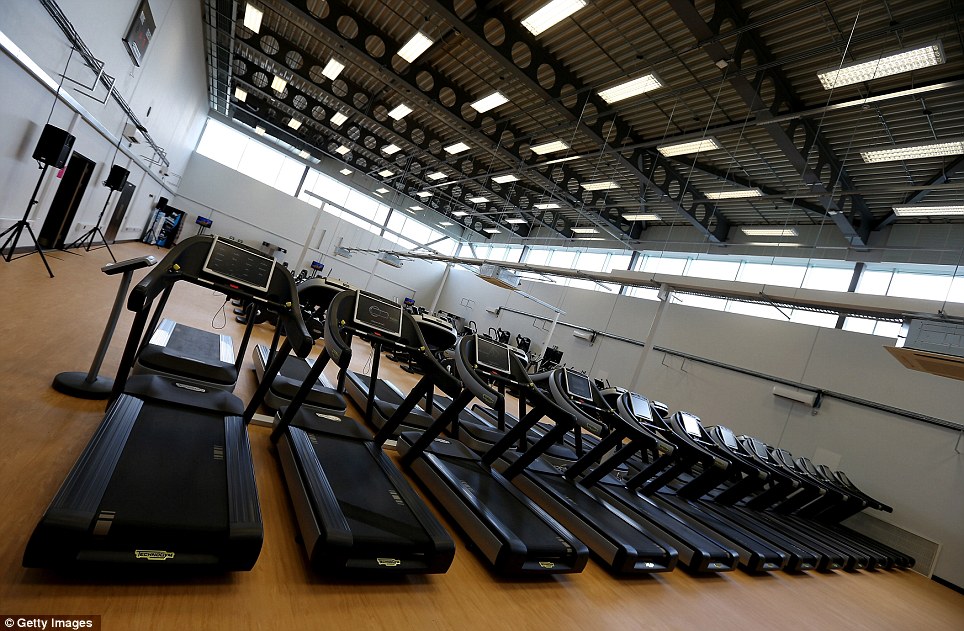
Picture: Getty Images


So we find that the uses and applications are growing all the time and we are always going to need heating, certainly in this country, but what we also find is that we can use less heating – the typical house heating load is a fraction of what it was a few decades ago.  Because the products are very flexible and able to fit into many different types of applications, it means infrared heaters can be used absolutely anywhere.

So would you agree because of the advancement of building design and construction that has encouraged this growth in using infrared technology?

Yes absolutely - no system is perfect and there are things to be considered when designing radiant heating systems.  One of the things to consider particularly in a residential and office situation is that you still need enough heat in the building to cover the heat loss, and if the heat loss is very high i.e. in a badly built leaky building, that would mean using a lot of radiant heating.  The problem can then be that it can appear too hot because our bodies can directly absorb the infrared heat coming from a large number of power infrared heaters -  and that was the problem in the past with heating these old badly put together buildings such as warehouses and large halls.

That’s all changed and now building regulations have changed and radiant heating comes in to its own.  One of the things that we bring to the market is having the expertise in how to apply the product to design a radiant heating system.  We have found that you have to be careful not to oversize it rather than undersize it, it is more often the case the system has been oversized and getting too warm than not warm enough. 

So it is important as part of the whole heating package that there is a controls system to make sure the system doesn’t get too hot, and again you need a bit of expertise and experience to design the system and to design it correctly so that it is working as perfectly as a heating system can. 

Thanks for your time Phil. 

Monday, 23 July 2012

Hot And Sweaty Again - But Will It Last?

"Temperatures this week are likely to top that figure with 30C possible across parts of south-east England between Tuesday and Thursday.

Absolutely loving the weather at the moment, check out the latest from SKY Weather - it gets better (apart from Scotland and Cumbria - sorry!):

http://news.sky.com/story/963734/weather-hot-week-forecast-for-parts-of-uk


Wednesday, 18 July 2012

I Have Become An Infra Red Heating Geek....

.....I am thinking of changing the name of this blog to theinfraredheatinggeek.com


Underfloor heating, domestic heating, radiators


Underfloor heating – which is still infra red heating – is capable of heating a whole house without popping the wood  floor up or destroying the laminate.  In fact underfloor heating is the most efficient type of heating because of the minimal heart stratification experienced when turning the system on – in a nutshell you get more consistent heat spread in the room compared to using a conventional gas heated radiator system.

We do rant on about infra red heating being far superior in terms of comfort, energy savings and ease of installation, but in all fairness you may quite like having old style radiators on the wall, perhaps boxed in with a decorative wooden panel.


Infra red heaters aren’t exactly much to look at, in fact you barely notice them at all, however it is the 'discreet-ness' that makes them so appealing to home owners, office landlords.  They can go behind the plaster board in the ceiling in between the rafters, they can be mounted on the wall with a picture design (insert picture) emitting heat, or as mentioned they can go right under your feet in the floor.  It just means you can reduce the amount of heaters attached to the wall, provide a comfortable spread of heat and not worry about the boiler breaking down in the winter – as long as your electricity supply is OK, you will have heating.  No bleeding of radiators, no service call out, just plain on..and off.

One of my goals is to build a house in Berkshire, right out in the sticks, and guess what I shall be using – yep, infra red ceiling and floor heating throughout....


Am I a bit of an infra red heater geek? – perhaps.

It just made total sense when learning about the benefits over using radiators that when the house is going through the design stages, I shall be accounting for the use of infra heaters.  Either the manufacturers have done a great sales job on me, or I am seriously on to something.  I want to keep my bills low, use the heating on demand at the flick of a switch and not have to worry about the boiler (except for hot water for my morning shower of course!).

Monday, 16 July 2012

Customer Feedback - How Do You Get Yours?


Favourite Customers...


You know the ones that pay on time, work with you during the specification phase, are clear about what they want and don't want, and give you feedback on the products and services you provide.

It seems the 80/20 principle can be applied here - but why is it only 20% of customers provide 80% of the feedback a business (especially an SME) really needs to grow, adapt and change to meet the demands of the end user.  How can we engage our customers more fully to provide a cleaner, smoother buying process where both parties are satisfied?

Do your customers provide unprompted feedback?  Is it a British thing to keep quiet and not make a fuss?  Will it make us too proud if we receive positive feedback?  We're apparently a nation of whiners - where's the whining gone?  If we can't hear you, we can't help you........

Thinking a little more about this topic - and how the likes of super seller Amazon openly encourage author / book seller feedback - it would seem the easier way to report on a book / book seller is through digital feedback systems, which is fine, but how about a bit of direct "liking", "not liking" or commenting over the phone, or for those who do prefer a written response - email.  I would expect most SME owners are very open to criticism that could lead to the discovery of a new and innovative way of conducting business based upon an upfront, and honest critique of the way the product or service was delivered.

Our harshest critics can turn out to be our greatest teachers.......

Granted, companies do use Facebook for feedback and for customer service messages, however, is social media really taking place of the customer service team, the person on the end of the phone?........What do  you think?

Anyway, back to our favourite customers:  we all have them - they pay on time, ask engaging questions and challenge us to be a better company, give honest feedback and give us referrals for more business.

Our hats are off, and we are bowing down to The House of Yoga Owner, Jason Pooley, who recently opened the first hot yoga studio in Putney.  He has worked very closely with us right from the get-go to ensure the best type and model of infra red heaters were fitted into the new studio, and that his members/clients would be happy with the hot room.


He provides us with regular feedback, what has worked, what hasn't worked, and asks questions about refining the controls of the heating system.  With this sort feedback we can improve our services, after sales support, and it helps when advising customers by providing solutions based upon experience rather than a manual.
He has provided us with referrals, and we are busy providing quotes for more hot yoga studios in and around the London area.

So, we are deeply grateful for the opportunity to get involved in a project that was a little outside of our usual scope, for the insights into the hot yoga industry and the chance to be a part of fast growing market.

Thanks Jason, we wish you the very best of success, and look forward to the expansion!


Wednesday, 11 July 2012

Infrared Heating - Discussion With Phil Alcock, MD, FRICO

Contd....Part 2 of Discussion With Phil Alcock, MD, FRICO UK.


Thanks Phil – infrared is becoming more and more popular in yoga studios, gymnasiums, sports halls; do you see any other growth areas where infrared heating can be used?

Infrared heating will provide heat in large areas such as warehouses, churches, sports halls, gymnasiums, which have very large air volume structures and traditional buildings like a warehouse, which is not usually well insulated.  Trying to heat the air space in those buildings is almost impossible or certainly very expensive to do, so radiant heating is better because you don’t have to heat such a huge air space. 
Radiant heating has not been the most obvious option to use, but now with very well insulated properties and at the other end of the scale, living rooms, domestic rooms, offices, yoga studios, most new buildings are now very well insulated - so radiant heating is a very, very effective solution.  Part of the reason for this is that the heat requirement in a well insulated environment is very low.  One of the benefits of using radiant heating is that you can very precisely match the heat loss of the room to the power needed - so in theory if the heat loss is 700W you install 700W of radiant heating.  You precisely match the heat load for that the room.  

Again, the advantage of radiant heating is that you don’t need to preheat the air or to provide a more powerful unit to provide a fast warm up, so you can very precisely match the heat loss.  If the heat loss is low, and for a small room typically it may only be few 100W which is the sort of heat contribution you would get from a couple of light bulbs - a small amount of radiant heating can provide a similar amount of radiant energy and because of that you can hide the radiant heating in parts of the structure.  You can put it in the floor, you can put them in the ceiling or on the wall as decorative panels, so there is a huge amount of possibilities but the main advantage is that you can directly match the heat loss and hide them in the structures very discreetly.

So what with better building standards – the use of infrared heating looks to be a far better alternative to gas central heating?

Yes exactly, and if you class under floor heating systems as radiant heating (which they are) there are an awful lot of new homes using this method of heating, and under floor is a very successful heating system – wet or electric – it is popular mainly because it is very easy to connect to a heat pump.  

Heat pumps are very energy efficient but they are very high capital costs and if you look at domestic radiant heating, it is very low capital costs and absolute zero maintenance.  In fact a lot of radiant heating systems we supply are intended to be largely DIY installed type products, so there is not such a huge level of skill required to install electric radiant heating system  - so it has a low capital cost and it has a low running cost which are just more examples of the advantages of using infrared heating systems – so, the fact is that when placed in a well insulated modern building we can provide heat with very low energy without the maintenance worries and costs.

Managing a sports centre?  Looking for ways to save energy?  Why not try installing infrared heating panels............visit our site:  Euro Controls UK Ltd